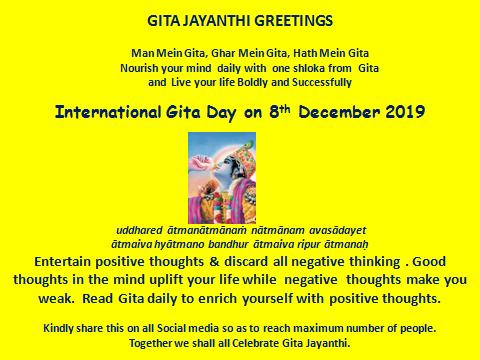
1:36nihhatya dhārtarāṣṭrān naḥ kā prītiḥ syāj janārdanapāpam evāśrayed asmān hatvaitān ātatāyinaḥ1:37tasmān nārhā vayaṁ hantuṁ dhārtarāṣṭrān svabāndhavānsvajanaṁ hi kathaṁ hatvā sukhinaḥ syāma mādhava In Śloka 36 and 37, Arjuna
READ MORE

Swamiji, Thank you for your response.But I think you did not get the question. A son cannot be described as born before his father! When a rishi vakya seems like a contradiction, it means we require more thorough search and refine ourself. They are so intelligent and hence there is no scope for any confusion. So I continued my search and got the answer. It is matching with what my Guru told me. This I got from http://www.harekrsna.com/sun/editorials/02-12/editorials8221.htm Here it is…. Varaha in the Vedic Literature Lord Varaha is glorified in virtually all of the major Puranas (the Vedic histories), which describe His different descents over the ages. In this kalpa (day of Brahma), Lord Varaha appeared twice. The first time He appeared from Brahma’s nostril with a white (sveta) complexion, and He saved the Earth after the previous devastation. Hence, He is called Sveta-Varaha and this kalpa is named after Him — the Sveta-Varaha-kalpa. Later He appeared in a dark color from the ocean to save the Earth after she had been violated by the demon Hiranyaksha. During this incarnation, LordVaraha reinstated the Earth in her proper orbit and killed the demon. The Varaha of the popular dasavatara (“the ten incarnations”) refers to this, Lord Varaha’s second appearance. To rescue the earth He appeared during the Svayambhuva-manvantara, from Brahma’s nostril, and during the Caksusa-manvantara, He appeared from the water. Lord Varaha, the best of tusked beasts, appears to kill Hiranyaksa and rescue the earth. Sometimes Varaha is a wild animal of the forest and sometimes He is a domestic animal. Sometimes He is dark as a raincloud and sometimes He is as white as the moon. In this way, smrti-sastra describes two gigantic forms of Lord Varaha, the form of Vedic sacrifices. Maitreya Muni described Lord Varaha’s pastimes at two different times as if they happened at the same time. (Srila Rupa Gosvami’s Laghu-bhagavatamrta 1.3.10-12,17) ————————————————- That might be the reason why Mythrya maharshi has broken the story into two pieces and did not describe the fight between Varaha and Hiranyaksha in the 13th adyaya and answered only after a question from Vidhura.(14-19). Bagavatha being the last. he might be expecting us to know all these details. Regards Venugopal.G, Thrissur
Posted by Venugopal G on July 6, 2012
Dear Venugopalji,
‘Varaham’ is ‘Aham Varan’ which means a surrendering and accepting mind. ‘Hiranyakshan’ represents an egoistic, selfish and possessive mind.
When ‘Varaham’ emerges, Hiranyakshan is destroyed. It happens not twice, but, endless times.
Please understand, there are so many walking encyclopedias in this world, with full of information.
Unless you transform information into wisdom through meditation and application in life, you can not transform your mind.
The entire information becomes futile.
So,please do not go into the authenticity of stories, but learn the lessons and apply in life.
HariOm!
No Schedules for this section.
No Schedules for this section.